

Published September 2026 · Data verified September 2026
Sunshine, food and an international community are what both Spanish coasts advertise. The official climate records, the Michelin guide and the Spanish population register show how each coast actually performs on all three.
Climate: nearly identical temperatures, very different rainfall
AEMET publishes long-run normals for every weather station in Spain. Málaga airport against Alicante:
| Málaga (Costa del Sol) | Alicante (Costa Blanca) | |
|---|---|---|
| Annual mean temperature | 18.5 °C | 18.3 °C |
| Mean daily maximum | 23.3 °C | 23.3 °C |
| Mean daily minimum | 13.7 °C | 13.2 °C |
| January mean maximum | 16.8 °C | 17.0 °C |
| August mean maximum | 30.8 °C | 30.8 °C |
| Annual sunshine | 2,905 hours | 2,851 hours |
| Annual rainfall | 534 mm | 311 mm |
Temperature and sunshine are within a rounding error of each other. January is marginally warmer in Alicante; August is identical. Both coasts get close to 2,900 hours of sun, around eight hours a day averaged across the year.
Rainfall is where they part. The Costa del Sol receives 72% more rain than Alicante, concentrated in autumn and early spring. Alicante's 311 mm puts it among the driest places in mainland Spain, which is why the southern Costa Blanca supports desert vegetation and why water charges, irrigation and drought restrictions come up more often there than on the Costa del Sol.
Neither coast has a cold winter. Málaga has among the mildest winters of any city on the European mainland, and daytime maxima on both sit around 17 °C in January. What people actually notice is indoor temperature: coastal housing is designed to shed summer heat, and the older stock is cold in February. The age and construction of the building decide that, and we cover it in our cost of living guide.
Food: daily markets first, stars second
Everyday eating is the part that shapes daily life, and it works the same way on both coasts: covered markets in every town, fish landed that morning, and a menú del día at lunch that remains one of the best-value meals in Europe. The traditions differ. Marina Alta rice dishes and Alicante's arroz a banda come from a different kitchen than the fried fish and espeto of the Málaga coast, and the produce behind both is grown or landed locally.
At the top end, the 2026 Michelin guide lists 13 starred restaurants in Alicante province and 10 in Málaga province. Spain's only three-star restaurant on either coast is Quique Dacosta in Dénia, and eleven of the thirteen Alicante restaurants sit in the Marina Alta within a forty-minute drive of each other. Dénia has been a UNESCO Creative City of Gastronomy since 2015. Málaga province spreads its ten across Málaga city, Marbella, Ronda and Fuengirola, with four in the city itself.
Golf: 70 courses against roughly 20
The Costa del Sol has more than 70 courses between Sotogrande and Málaga, the densest concentration in continental Europe and the reason the stretch is marketed as the Costa del Golf. Sotogrande, Valderrama, Finca Cortesín, La Reserva and the Marbella clubs sit inside a short drive of each other, and the density supports the year-round golf-property market around Mijas, Benahavís and Estepona.
The Costa Blanca has around twenty, clustered in three places: the Alicante and Elche belt, the Benidorm and Finestrat area, and the southern Orihuela Costa corridor, where Las Colinas, Villamartín, Campoamor and La Finca sit close together. Fewer courses, materially lower green fees and membership costs, and the same winter playing season.
Both coasts play twelve months a year, against a season that closes for the winter in most of northern Europe.
Where international residents actually live
The Spanish population register settles the "cosmopolitan" question. Of the twenty Spanish municipalities with the highest share of foreign residents, twelve are in Alicante province and three are in Málaga province — January 2025 register, published April 2026.
| Municipality | Province | Foreign residents |
|---|---|---|
| San Fulgencio | Alicante | 77.6% |
| Rojales | Alicante | 72.4% |
| Llíber | Alicante | 69.8% |
| Benitachell | Alicante | 68.5% |
| Teulada | Alicante | 64.9% |
| Calp | Alicante | 62.8% |
| Alfàs del Pi | Alicante | 61.9% |
| Torrevieja | Alicante | 56.4% |
| Benalmádena | Málaga | 53.6% |
| Jávea | Alicante | 52.9% |
| Mijas | Málaga | 49.7% |
| Fuengirola | Málaga | 46.8% |
The two coasts are international in different ways. The Costa Blanca's foreign population is larger as a share, older on average, concentrated in residential towns, and organised around long-established Northern European, British, Dutch, Belgian and German communities with their own clubs, churches and clinics. Alfàs del Pi has a Norwegian school and a Norwegian consulate.
The Costa del Sol's is smaller as a share and more mixed by origin and by wealth. Marbella's municipal register counts 156 nationalities, and the Marbella–Benahavís corridor draws Middle Eastern, Scandinavian, Latin American and Northern European residents at high income levels. Málaga city has changed fastest, pulling in technology workers and remote professionals rather than retirees.
Schools follow the communities. Both coasts have established international schools teaching British, American, German, Norwegian, Swedish and French curricula. The Costa del Sol's cluster in the Marbella–Estepona corridor and around Málaga, at fees set by an international market; the Costa Blanca's spread from Alicante and El Campello up through Benidorm to Jávea and Dénia, at lower fees on average. Where the school is usually decides where a relocating family buys, and we set out the schools, curricula and fee ranges on both coasts in a separate guide.
Language works the opposite way from the register. A high share of foreign residents does not mean the local service economy operates in English. On the Costa del Sol it largely does: Marbella, Puerto Banús, Fuengirola, Benalmádena and Málaga run on tourism, property and international business, and English is a working standard among agents, lawyers, banks, private clinics, restaurants and trades. On the Costa Blanca the foreign population is larger but more fragmented by nationality, and the businesses serving it are often run by fellow nationals — Dutch, Norwegian, German, British — for their own community. English is easy in Jávea, Moraira, Torrevieja, Orihuela Costa and Alfàs del Pi, and thins out quickly inland and in the Spanish towns between them.
Beaches, mountains and water
Beaches. The Costa del Sol runs roughly 160 km and the Costa Blanca roughly 240 km. The Costa del Sol has long, wide, mostly sand beaches with an unbroken promenade through much of the built-up stretch. The Costa Blanca alternates sandy bays in the south with coves and cliffs from Altea north through Calpe, Moraira and Jávea, where the Montgó massif drops into the sea.
Mountains within half an hour. Sierra de las Nieves behind Marbella became a national park in 2021. On the Costa Blanca the Montgó, the Sierra Helada and the Aitana range give a network of marked trails from sea level to 1,500 m.
Water. Sea temperatures allow swimming from June to late October on both coasts, and diving, sailing and paddle sports run year-round. The marinas — Puerto Banús, Marbella, Estepona, Benalmádena, Sotogrande; Alicante, Dénia, Jávea, Moraira, Torrevieja — are also where much of the social life happens.
Sport: what each coast is known for
Both coasts sell a twelve-month outdoor season. What they do with it differs, and each has a handful of things it does at an international level.
The Costa del Sol.
Golf, at the density set out above, and the reason a large share of the property market here is built around a course.
Polo. Santa María Polo Club in Sotogrande is one of the most important clubs in Europe: nine fields across three sites, more than thirty tournaments a year, and the Sotogrande Gold Cup running since 1971. The August tournament season is part of the social calendar as much as the sporting one.
Football. Marbella has become one of Europe's main winter training bases for professional clubs, which is why northern European teams appear in the town every January.
Sailing, out of Puerto Banús, Marbella, Estepona, Benalmádena and Sotogrande.
Skiing. Sierra Nevada is about two hours by road. Between December and April you can ski in the morning and be on the coast in the afternoon, which no other Mediterranean coast in Spain offers.
The Costa Blanca.
Offshore sailing. Alicante has started every edition of The Ocean Race since 2008–09, more often than any other city in the world. The 2027 edition leaves in January, and the race village takes over the port for ten days.
Road cycling. Calpe, Altea, Dénia and Benidorm fill with professional teams and amateur training camps every winter, drawn by dry roads, empty climbs and the Aitana. Benidorm also hosts a round of the UCI Cyclo-cross World Cup in January.
Climbing. The Peñón de Ifach at Calpe and the crags around Sella are established international sport-climbing destinations.
Wind sports. Santa Pola is one of the recognised kitesurfing and windsurfing spots on the Spanish Mediterranean.
Hiking, on the Montgó, the Sierra Helada, the Aitana and the Vall de Guadalest.
Both coasts. Padel courts are now standard equipment in developments, alongside the pool. Tennis and golf run twelve months. Running and open-water swimming clubs exist in every town of size. The promenades are used by residents all year, and daily walking is built into how people live here. That habit is the substance behind the word healthy in the local property marketing.
The Costa del Sol's luxury tier
The Costa del Sol carries a fully developed luxury economy, concentrated in the Marbella–Benahavís–Estepona triangle and Sotogrande. Puerto Banús and the Marbella marinas, the beach clubs along the Golden Mile, Finca Cortesín and Valderrama, private members' clubs, brand retail, a summer season with an international calendar, and a service layer of private security, staffing, yacht and aviation agents built to support it.
That tier has its own property market, its own price behaviour and its own buyer, and it is the reason the two coasts are not comparable above roughly €1.5M. We cover it separately in our Marbella and Golden Triangle analysis.
The Costa Blanca's high end is a different proposition: villas with sea views in Jávea, Moraira, Altea Hills and Benissa, priced well below Marbella equivalents, in towns that stay residential year-round.
What this means for choosing a coast
Choose the Costa del Sol for golf density, for a service economy that works in English at every level, for Málaga city, and for a genuine luxury tier. Expect more rain and higher costs.
Choose the Costa Blanca for the drier climate, the most settled international communities in Spain, the Marina Alta's food, and a lower cost base on everything from green fees to school fees to community charges.
The temperature and sunshine records are the same on both coasts. What separates them is rainfall, price, how easily the local service economy works in your language, the community around you, and what you plan to do on a Tuesday in February.
We compare the two coasts in full — prices, yields, taxes, access and buying process — in our decision guide.
How Directimo works
Directimo represents the buyer, never the seller. Listing agents in Spain are contracted by the vendor and paid to protect the vendor's price.
We start from how you intend to use the property and work back to the town, then the street. That means matching the community around a development to the one you want, checking what is actually within walking distance, and putting the running costs beside the purchase price before you commit. The properties we source average 13.5% below area market prices. We have completed more than 1,000 transactions since 2011, totalling over €300M in property sold.
Talk through which coast fits: directimo.com/advisory-call
Buyers weighing Spain against Portugal, Italy, Greece or France will find the comparison in our country guide.
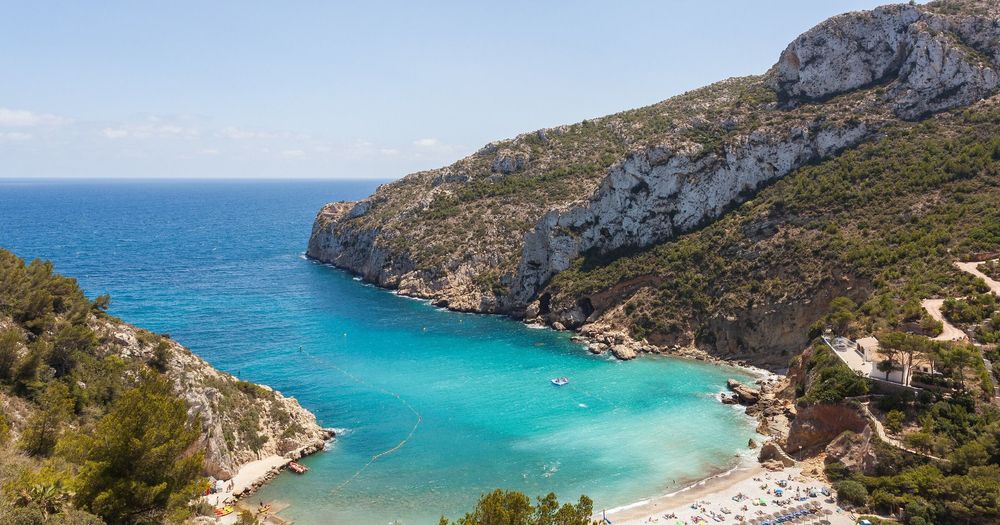
Sources. AEMET — climate normals for Málaga Aeropuerto and Alacant/Alicante, reference period 1981–2010. MICHELIN Guide Spain 2026 — starred restaurants by province. INE, Padrón Continuo January 2025, published April 2026 — foreign residents by municipality. UNESCO Creative Cities Network — Dénia, gastronomy, 2015. Costa del Sol tourist board — golf course count. The Ocean Race and Alicante Sports Destination — start-port history and the 2027 edition. UCI — Benidorm Cyclo-cross World Cup. Andalucía tourism board — Santa María Polo Club, Sotogrande. Directimo Costa del Sol and Costa Blanca Market Reports, September 2026. Cover photograph: Cala de la Granadella, Jávea — Diego Delso, CC BY-SA 4.0.
Method. Climate figures are official station normals and describe the airport locations, which sit close to sea level; inland and elevated locations on both coasts run cooler and wetter. Michelin counts are by province and cover the full 2026 guide, including restaurants outside the coastal strip. Register percentages count residents holding foreign nationality, so long-settled residents who have taken Spanish nationality are not included.
This guide is market research, not investment, tax or legal advice.