

Published September 2026 · Data verified September 2026
Your status decides how you reach Spanish healthcare, and it varies more between buyers than the choice of town does. A retired Dane with an S1, a French couple who have not yet reached pension age, a Dutch freelancer working from Alicante and a German family who visit for eight weeks a year all sit in different positions, and only one of them gets full public cover for free.
Which route applies to you
| Your situation | Route | What it costs |
|---|---|---|
| Retired, drawing a state pension from an EU/EEA country, Switzerland or the UK | S1 registered with Spanish social security | Free. Your home country pays Spain |
| Working or self-employed in Spain | Social security contributions | Included in contributions |
| Resident, not working, no S1 | Convenio especial, private insurance, or both | €60–157 a month public, €80–300+ private |
| Applying for a non-lucrative or digital nomad visa | Private insurance, to a specific standard | €80–300+ a month, paid a year in advance |
| Non-resident, visiting | EHIC/GHIC plus travel insurance | Emergency care only |
Everything below explains what each of those actually means once you are here.
The S1: the single largest cost difference
If you draw a state pension from another EU or EEA country, Switzerland or the UK, your home country pays Spain for your healthcare. You obtain an S1 form from your home authority, register it with Spanish social security, and receive a health card giving you the same access as any Spanish resident, including prescriptions at pensioner rates.
That entitlement covers your dependants. It is the reason a retired buyer's annual budget is several thousand euros lighter than a working-age buyer's, and it is worth confirming eligibility with your home authority before you commit to a purchase rather than after.
Early retirees who have stopped working but have not yet reached state pension age do not qualify. That gap often runs five to ten years and needs its own plan.
Working here
Employment or self-employment in Spain brings social security contributions, and those contributions carry full public healthcare for you and your dependants. Nothing separate is paid for medical cover.
Buying into the public system: the convenio especial
Legal residents who are not contributing and hold no S1 can buy access to the public system directly. Most regions, including Andalucía and the Comunitat Valenciana, sell it at:
- €60 a month under 65
- €157 a month at 65 and over
You need to have been registered on the municipal padrón for at least a year. The cover is the public system in full, with one gap that matters: prescriptions are excluded, so medication is paid at full price. For anyone on regular long-term medication that gap can outweigh the low premium, and it is the calculation to run before choosing this route.
Private insurance
Premiums quoted in 2026 by insurers operating on both coasts:
| Age | Monthly premium, no co-payment |
|---|---|
| 30s–40s | €80–160 |
| 50s | €130–220 |
| 60s and over | €180–300+ |
Policies with a co-payment per visit come in 15–30% cheaper. Pre-existing conditions, waiting periods and upper age limits for new policies are where the differences between insurers appear, and they matter more than the headline premium.
Visa applicants need a specific kind of policy. For a non-lucrative or digital nomad visa the consulate requires cover that meets four conditions: no co-payments, no waiting periods, comprehensive cover including repatriation, and an insurer authorised to operate in Spain. Most consulates also require the first twelve months paid in advance. An international expatriate policy without a Spanish legal entity is routinely rejected, and a cheap co-payment policy will not pass either.
Visiting rather than living here
A European Health Insurance Card, or the UK's GHIC, covers medically necessary treatment during a temporary stay, on the same terms as a Spanish resident. It does not cover planned treatment, private hospitals, or repatriation, and it does not work if you are actually resident in Spain and using it as a substitute for registering. Owners who spend a few months a year here normally hold travel insurance alongside it.
What the public system delivers, and where it strains
Spanish public healthcare is comprehensive, and quality of clinical care is high. The pressure point is waiting time for non-urgent treatment.
Average waits for scheduled surgery, from the national waiting-list system:
| Average surgical wait | |
|---|---|
| Andalucía | ~125 days |
| Comunitat Valenciana | ~148 days |
| Best-performing region (Navarra) | ~75 days |
Urgent and oncological cases are prioritised and move far faster. The wait applies to planned procedures — joint replacements, cataracts, hernias, non-urgent traumatology — and it is the main reason a large share of foreign residents carry private insurance alongside public entitlement.
Prescriptions. Pensioners pay 10% of the cost with a monthly ceiling set by income; working-age residents pay 40% to 60%, also by income. Medication is cheap by northern European standards either way, provided you are inside the system.
Where the hospitals are
Proximity to a hospital is a location criterion, and it is one buyers rarely check before they choose a development.
Costa del Sol — public
| Hospital | Serves |
|---|---|
| Hospital Costa del Sol, Marbella | Marbella, Benahavís, Estepona, Mijas, Fuengirola |
| Hospital Regional Universitario, Málaga | Málaga and the province's referral centre |
| Hospital Universitario Virgen de la Victoria, Málaga | Málaga city and west |
| Hospital de Alta Resolución, Benalmádena | Benalmádena, Torremolinos |
| Hospital Comarcal de la Axarquía, Vélez-Málaga | The eastern coast and Axarquía |
Costa del Sol — private: Quirónsalud Málaga and Marbella, Vithas Xanit Benalmádena, Vithas Málaga, HC Marbella, Hospital Ochoa Marbella. Helicópteros Sanitarios in Marbella runs a subscription home-doctor and ambulance service that is unusual in Spain and popular with residents in the Marbella–Estepona corridor.
The private sector here is strong by national standards, and it is measured. Hospital Quirónsalud Marbella is the only private hospital in Marbella and its district to appear in Merco's ranking of Spain's hundred most reputed hospitals, and in 2024 it took the Best Spanish Hospitals award for value-based health evaluation, judged across a field of 138 public and private hospitals on around 110 clinical processes. That concentration of private capacity is one of the practical reasons the Costa del Sol attracts residents who expect immediate access to specialists.
Costa Blanca — public
| Hospital | Serves |
|---|---|
| Hospital General Universitario Dr. Balmis, Alicante | Alicante city, provincial referral centre |
| Hospital Universitario de Sant Joan d'Alacant | El Campello, Sant Joan, northern Alicante belt |
| Hospital Marina Baixa, Villajoyosa | Benidorm, Altea, Finestrat, Villajoyosa |
| Hospital de Dénia | Dénia, Jávea, Teulada-Moraira, the Marina Alta |
| Hospital Universitario de Torrevieja | Torrevieja and the southern coast |
| Hospital Vega Baja, Orihuela | Orihuela, Orihuela Costa, the Vega Baja |
| Hospital General Universitario de Elche | Elche, Santa Pola |
The Dénia and Torrevieja hospitals were run for years under private concessions and returned to direct public management, Torrevieja in 2021 and Dénia in 2024. The Torrevieja health district serves one of the fastest-growing and most international populations in Spain from a single hospital, and pressure on it is a live local issue.
Costa Blanca — private: Quirónsalud Torrevieja and Alicante, Vithas Medimar Alicante, HLA Vistahermosa Alicante, IMED Levante in Benidorm, IMED Elche, Clínica Benidorm, Hospital San Carlos in Dénia.
Language
In the private sector on both coasts, English is standard and German, Dutch and the Scandinavian languages are common in the international towns. In the public system it varies by department: Torrevieja, Dénia, Marina Baixa, Costa del Sol and Benalmádena all serve large foreign populations and are used to it; smaller inland health centres are not. Public hospitals in these districts provide interpreters, and the appointment is smoother if you request one when booking.
What to settle before you buy
Confirm your route first. The S1 question decides the size of the healthcare line in your budget, and it has a yes or no answer you can get before you make an offer.
Check the drive time to the nearest hospital, which is a different question from the nearest clinic. Some of the most attractive locations on both coasts — inland urbanisations in the Marina Alta, the hills behind Marbella, the quieter parts of the Vega Baja — are further from emergency care than the drive time suggests in August traffic.
Price the private policy at your real age, and check the upper age limit for taking out a new policy with that insurer. Premiums rise steeply after sixty and some insurers will not write a new policy past a certain age at all.
If you are on regular medication, price it before choosing the convenio especial, since prescriptions sit outside it.
Healthcare cost lines for both coasts sit alongside the rest of the annual budget in our cost of living guide, and the pension, residency and succession side is in our guide to retiring to Spain.
How Directimo works
Directimo represents the buyer, never the seller. Listing agents in Spain are contracted by the vendor and paid to protect the vendor's price.
When healthcare access shapes the decision, we work back from it: the hospital district, the real drive time, and which towns have the services you will use. The properties we source average 13.5% below area market prices. We have completed more than 1,000 transactions since 2011, totalling over €300M in property sold.
Talk through your situation: directimo.com/advisory-call
Daily life on each coast — climate, food, sport and the international communities — is covered in our lifestyle comparison.
What becoming a Spanish tax resident changes is covered in our tax residency guide.
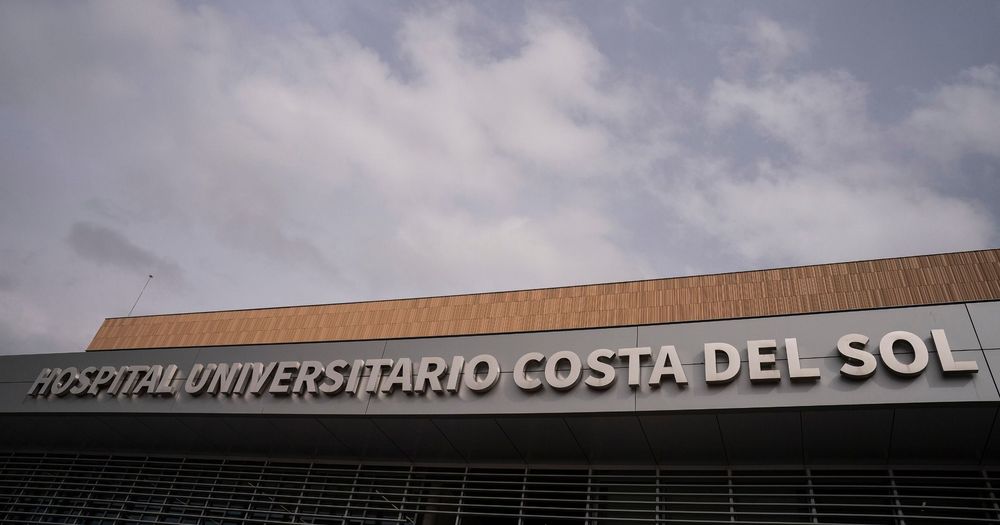
Sources. Spanish social security — convenio especial rates and S1 registration. Ministerio de Sanidad, national waiting-list information system — average surgical waiting times by region, latest published data. Spanish consular requirements for residence visa health insurance, 2026. Servicio Andaluz de Salud and Conselleria de Sanitat — hospital networks by district. Merco hospital reputation ranking and the Best Spanish Hospitals awards, 2024. Private insurance premiums as quoted by insurers operating on both coasts, 2026. Cover photograph: Hospital Universitario Costa del Sol, Marbella — Junta de Andalucía, CC BY-SA 4.0.
Method. Premium ranges are indicative quotes for policies without co-payment and vary by insurer, region and medical history. Waiting-time figures are regional averages across all specialties; individual specialties and hospitals vary widely around them. Hospital lists cover the main public and private centres serving the coastal strip and are not exhaustive.
This guide is market research, not medical, legal or immigration advice. Entitlement depends on your nationality, residence status and personal circumstances, and should be confirmed with the relevant authority before you rely on it.